Unlocking the potential of plant-based food value chains

Europe’s food value chains face enormous challenges. To feed people well, while protecting our health, our farmers, and our planet, we need to grow more of our protein from plants. This shift needs ambitious policies for innovation.

Plant-based foods must be delicious, affordable, healthy and convenient enough that choosing them feels easy. Getting there means investing in research, better ingredients and scaling up production. That’s the work we exist to support.

Our goals

A stronger, more secure Europe.

Growing more protein crops at home means shorter, more resilient supply chains and less dependence on imports. Today the EU still sources 66% of its high-protein feed from abroad. Increasing plant-protein production for direct human consumption, contibutes to closing protein gap and avoids a conversion loss of more than 75%. It also means real food sovereignty in an uncertain world, and new markets and higher-value opportunities for European farmers.

Healthier people, lower costs.

Most Europeans don’t eat enough legumes, wholegrains, fruit and vegetables, and the health toll is enormous, as the hidden costs of unhealthy diets run to nearly €900 billion a year across the EU. Making plant-based options tastier and easier to reach is one of the most cost-effective ways to turn that around.

A competitive edge worth keeping.

Both the US and China are rapidly expanding their plant-based sectors. With the Chinese government prioritising protein diversification, China could undergo a transformation of its food system similar to its previous industrial changes. The EU must implement the right policies to remain competitive. Europe’s food industry is ready to invest in the continent and retain jobs, expertise and manufacturing.

What we do

We bring together the businesses, researchers, and organisations building the future of food, and we make the case in Brussels for the EU Action Plan for Plant-Based Food and the funding to match Europe’s ambition. A better food system is within reach and it’s worth building together.

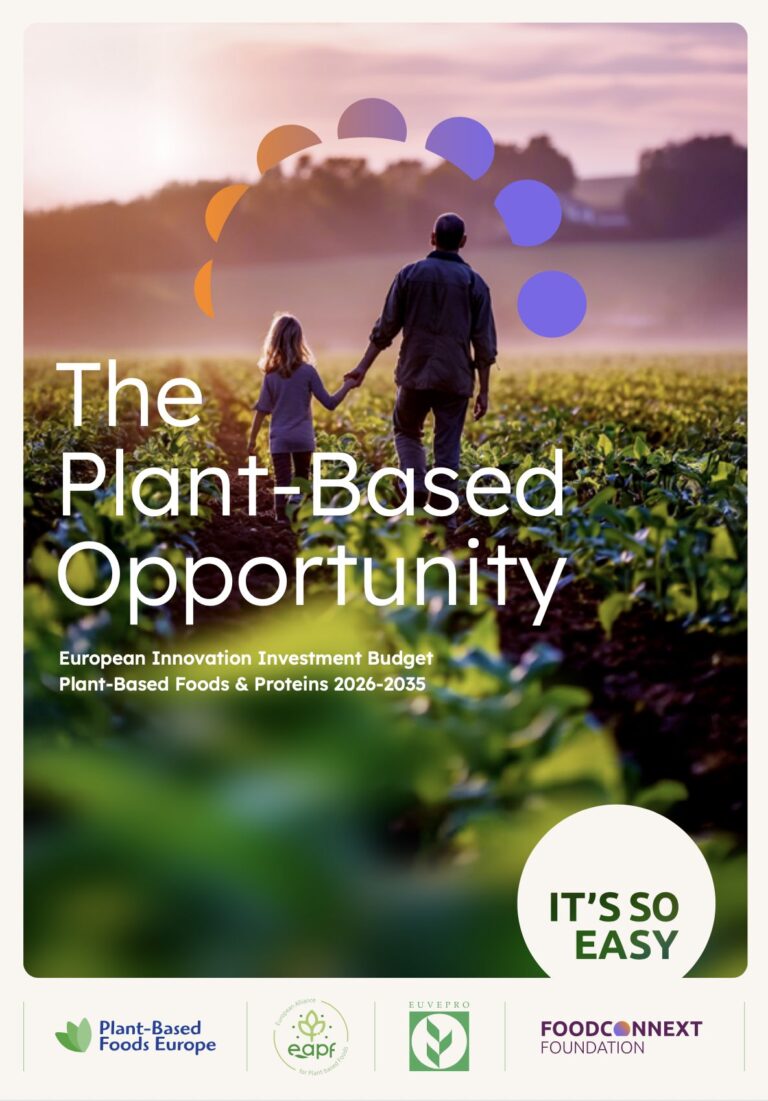
Report: The Plant-Based Opportunity

In our report, we identified 75 innovation projects worth €3 billion over the next decade.

The Plant-Based Opportunity 2026–2035 sets out why Europe needs an EU Action Plan for Plant-Based Food and protein innovation and what industry is ready to put on the table in return. It gathers seventy-five concrete innovation projects from across the sector, spanning the whole value chain, with a combined investment budget of €3.0 billion between 2026 and 2035. These are not hypotheticals: Europe’s plant-based food industry stands ready to co-invest in research, product development and manufacturing scale-up, provided the policy framework offers long-term predictability.

The report builds the case around seven drivers. A protein transition towards more plant-based and fewer animal-based foods, shifting the ratio from 40:60 to 60:40, strengthens food security and sovereignty, improves public health, gives farmers profitable new crops with lower input costs, keeps Europe competitive as the US and China scale up, protects the climate and biodiversity, drives growth and jobs, and reduces public expenditure. The last of these is the most striking: in 2022 the economic costs of animal-based food production and consumption in the EU amounted to €3 trillion, and a shift to healthier, more plant-based diets could avoid 43% of them – €1.3 trillion a year, more than twenty times the size of the CAP budget.

Europe has world-class capabilities in crop breeding, protein science and food technology, and publicly funded projects have already delivered market successes. Yet plant-based-specific research has been chronically underfunded relative to the sector’s potential, too often diluted within broader protein calls. Meanwhile the United States, Israel and Singapore are investing heavily and building dedicated infrastructure.

The opportunity is straightforward. With targeted R&I across the whole value chain, from protein-crop breeding and agronomy to processing and finished products, Europe can bring better, more affordable plant-based foods to market faster, create skilled jobs and strengthen its strategic autonomy in food and feed.

Read the full report here.
What we ask for

We ask the European Union, its Member States and its regions to triple investment in plant-based research and innovation, mobilising €3 billion across 75 projects by 2035. Concretely, that means:

➔ An EU Action Plan for Plant-Based Food.

➔ Dedicated, plant-based-specific funding under Horizon Europe and FOOD2030.

➔ Scale-up support for the SMEs and start-ups driving the sector.

➔ Support for farmers to diversify into protein crops for human consumption.

➔ Long-term policy predictability, the condition under which industry has committed to invest.

Bridging the gap between science and policymaking

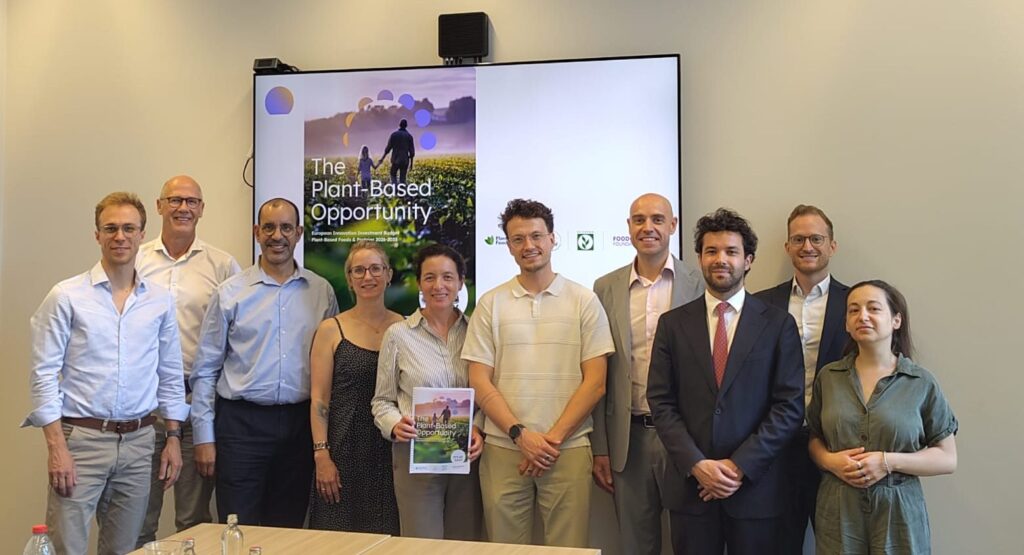
On 23 June, EAPF brought researchers, innovation experts, industry leaders and policymakers around one table to discuss how Europe can accelerate plant-based research and innovation and overcome the bottlenecks that hold it back. Representatives of the European Commission were joined by experts from Cargill, Oatly, New Originals and the FoodConNext Foundation for a constructive exchange on how to turn the ambition set out in The Plant-Based Opportunity into policy.

Read more about roundtable here.

Find out more

plantbased-RI-e1783413286107
The_Plant-based_Opportunity